OpenAI's Jalapeño Chip: The Hard Math Behind Inference Economics
OpenAI's custom Jalapeño chip, built with Broadcom, targets Nvidia's profit margins. We analyze the infrastructure economics and what it means for AI inference costs.
Last updated: June 25, 2026
On this page
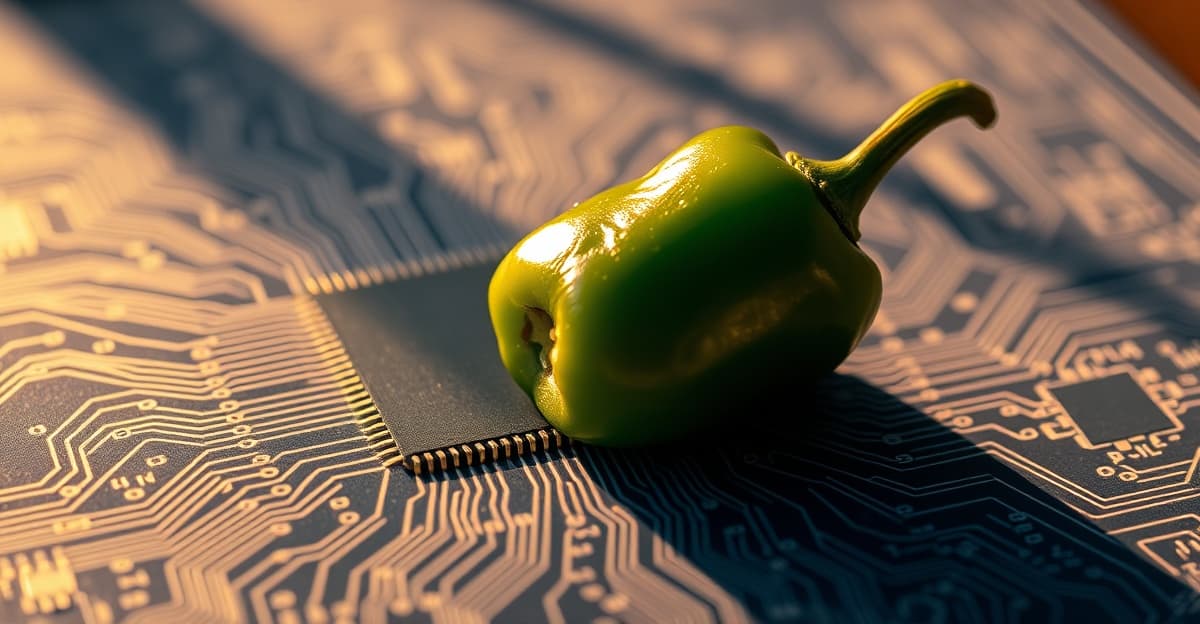
OpenAI's Jalapeño chip is a custom ASIC designed to cut inference costs by bypassing Nvidia's high-margin GPUs. It targets the economics of deploying large models at scale.
OpenAI’s decision to develop a custom inference chip, the Jalapeño, was not driven by a desire for novelty. It was a direct response to the brutal arithmetic of AI infrastructure: Nvidia’s GPUs, which power the vast majority of AI workloads, carry an estimated 75% profit margin. For a company burning through billions in compute costs, that margin represents an existential tax on its own growth. The Jalapeño chip, an application-specific integrated circuit (ASIC) built with Broadcom, is OpenAI’s attempt to reclaim that margin and fundamentally reshape the economics of deploying models like GPT-4o.
- Nvidia’s estimated 75% profit margin on its AI chips creates a massive cost burden for companies like OpenAI, directly motivating custom silicon development.
- The OpenAI Jalapeño chip is a custom ASIC designed specifically for inference, not training, targeting the high-volume, cost-sensitive phase of AI deployment.
- By controlling its own hardware, OpenAI can optimize the full stack from model architecture to silicon, potentially slashing per-token inference costs.
- The move signals a broader industry trend: major AI labs are becoming hardware companies to escape vendor lock-in and control their economic destiny.
- For enterprise adopters, this could mean lower API pricing and more predictable costs, but also a more fragmented hardware ecosystem.
- The success of the Jalapeño chip hinges not just on silicon performance, but on the ability to seamlessly integrate it into existing infrastructure without disrupting service.
How Does the Jalapeño Chip Change the Inference Cost Equation?
The core insight behind the Jalapeño chip is that inference, not training, is where the long-term costs accumulate. Training a frontier model might cost hundreds of millions, but inference costs recur with every user query, every API call, every embedded model interaction. Nvidia’s GPUs are general-purpose workhorses, designed for both training and inference, and their high margins reflect that versatility. An ASIC like the Jalapeño strips away all unnecessary generality. It is a single-purpose engine, optimized for the specific mathematical operations of transformer-based inference: matrix multiplications, attention mechanisms, and activation functions. This specialization allows for higher throughput per watt and per dollar. For OpenAI, even a 20% reduction in per-token inference cost translates to hundreds of millions in annual savings, savings that can be reinvested in model development or passed on to customers.
For enterprise teams evaluating AI vendors, ask about their infrastructure strategy. Companies investing in custom silicon are signaling long-term commitment to cost optimization, which often leads to more stable pricing.
Why Is the Chip’s Success Tied to Software Integration?
Hardware is only half the battle. The Jalapeño chip’s real value will be determined by the software stack that wraps around it. OpenAI must ensure that its models, particularly the massive GPT-4 class systems, can be seamlessly deployed on the new silicon without performance regressions. This requires a sophisticated compiler stack, likely leveraging OpenAI’s Triton language, to map model operations onto the chip’s specific compute units. Any friction in this integration, any need for manual model rewrites, will erode the cost advantage. The chip must also slot into existing data center infrastructure, working alongside Nvidia GPUs for training and potentially for certain inference workloads. The engineering challenge is not just building a fast chip, but building one that disappears into the operational fabric.
| Aspect | General-Purpose GPU (Nvidia) | Custom ASIC (Jalapeño) | Impact on Inference Economics |
|---|---|---|---|
| Design Flexibility | Handles training and inference | Inference-only, fixed function | Higher efficiency for inference, zero training utility |
| Profit Margin for Vendor | ~75% (estimated) | OpenAI internal cost | Direct savings on per-token cost |
| Software Ecosystem | Mature (CUDA, TensorRT) | Needs custom compiler (Triton) | Higher initial integration cost, but potential for tight optimization |
| Supply Chain | High demand, constrained | Custom order, dedicated fab | Greater predictability, but higher upfront NRE (non-recurring engineering) |
| Use Case Fit | Broad, any model | Optimized for transformer inference | Best for high-volume, production inference workloads |
What Does This Mean for the AI Hardware Market?
OpenAI’s move is a clear signal to the market that the era of single-vendor dominance in AI hardware may be waning. While Nvidia will remain the dominant player for training, the inference market is fragmenting. Google has its TPUs, Amazon its Trainium and Inferentia, and now OpenAI has the Jalapeño. For enterprises, this fragmentation is a double-edged sword. On one hand, it promises competition, lower prices, and more choice. On the other hand, it creates a complex multi-architecture environment where portability of models becomes a key concern. The NeuralPress AI Statistics & Trends 2026 resource notes that 73% of enterprise AI projects never reach production, and hardware fragmentation is a contributing factor. Companies will need to invest in abstraction layers, like ONNX or custom compilers, to avoid being locked into any single chip ecosystem.
Who Benefits Most From This Development?
- High-volume API Users: Companies that make millions of API calls to OpenAI per month stand to gain the most. Lower inference costs should translate directly into lower API pricing over time, or at least more predictable pricing without sudden jumps.
- OpenAI Itself: The primary beneficiary is OpenAI. By capturing the hardware margin, it can improve its unit economics, extend its runway, and reinvest in R&D. This is a strategic move to ensure long-term financial sustainability.
- Broadcom: As the manufacturing partner, Broadcom gains a high-profile customer and validates its ASIC design capabilities for AI workloads, potentially opening doors to other large AI labs.
- The Broader AI Ecosystem: The pressure on Nvidia to reduce margins or innovate faster increases, benefiting all AI consumers. Custom silicon drives competition.
Do not assume the Jalapeño chip will immediately lower API costs. OpenAI may initially use the savings to improve its own margins or invest in more expensive training runs. Price reductions for end users are likely only after the chip is fully amortized.
Which Risks Could Derail the Jalapeño Chip’s Promise?
The most significant risk is execution. ASIC development is notoriously difficult. Tape-out failures, yield issues, or performance not meeting simulation expectations can delay deployment by months or years. There is also the risk of architectural obsolescence. If the dominant model architecture shifts away from transformers, the chip’s fixed-function design could become a liability. Furthermore, the chip’s success depends on OpenAI’s ability to maintain its model leadership. If a competitor’s model becomes the default choice, the chip’s value drops. Finally, there is the geopolitical risk. Chip fabrication, likely at TSMC, is subject to global supply chain disruptions and export controls. A single geopolitical event could halt production.
What Should Decision-Makers Watch For?
The key indicator to watch is not the chip’s raw performance specs, but OpenAI’s pricing announcements in the 12-18 months following the chip’s deployment. A reduction in GPT-4o API pricing, or the introduction of a cheaper tier, would be the clearest signal that the Jalapeño is delivering on its promise. Also watch for technical publications from OpenAI detailing the chip’s architecture and performance benchmarks. Transparency in these areas will build trust and help the ecosystem plan for integration. For now, the Jalapeño chip represents a bold bet that the future of AI economics will be written in custom silicon, not just software.
Source: AI News
Frequently Asked Questions
What is the OpenAI Jalapeño chip?
It is a custom application-specific integrated circuit (ASIC) developed by OpenAI in collaboration with Broadcom. Unlike general-purpose GPUs, it is designed specifically for running AI inference workloads, not training.
Why did OpenAI decide to build its own chip?
OpenAI's primary motivation was economic. Nvidia's GPUs carry an estimated 75% profit margin, representing a massive recurring cost for inference. A custom chip allows OpenAI to capture that margin and reduce its per-token inference costs.
Will the Jalapeño chip lower API prices for customers?
Potentially, but not immediately. OpenAI may initially use the savings to improve its own margins or fund more research. Price reductions for API users are more likely once the chip's development costs are amortized.
How does the Jalapeño chip compare to Nvidia's GPUs?
The Jalapeño is less flexible than a GPU, as it is optimized only for inference. However, this specialization allows it to achieve higher throughput and energy efficiency for that specific task, which is where the cost savings come from.